What the tank does
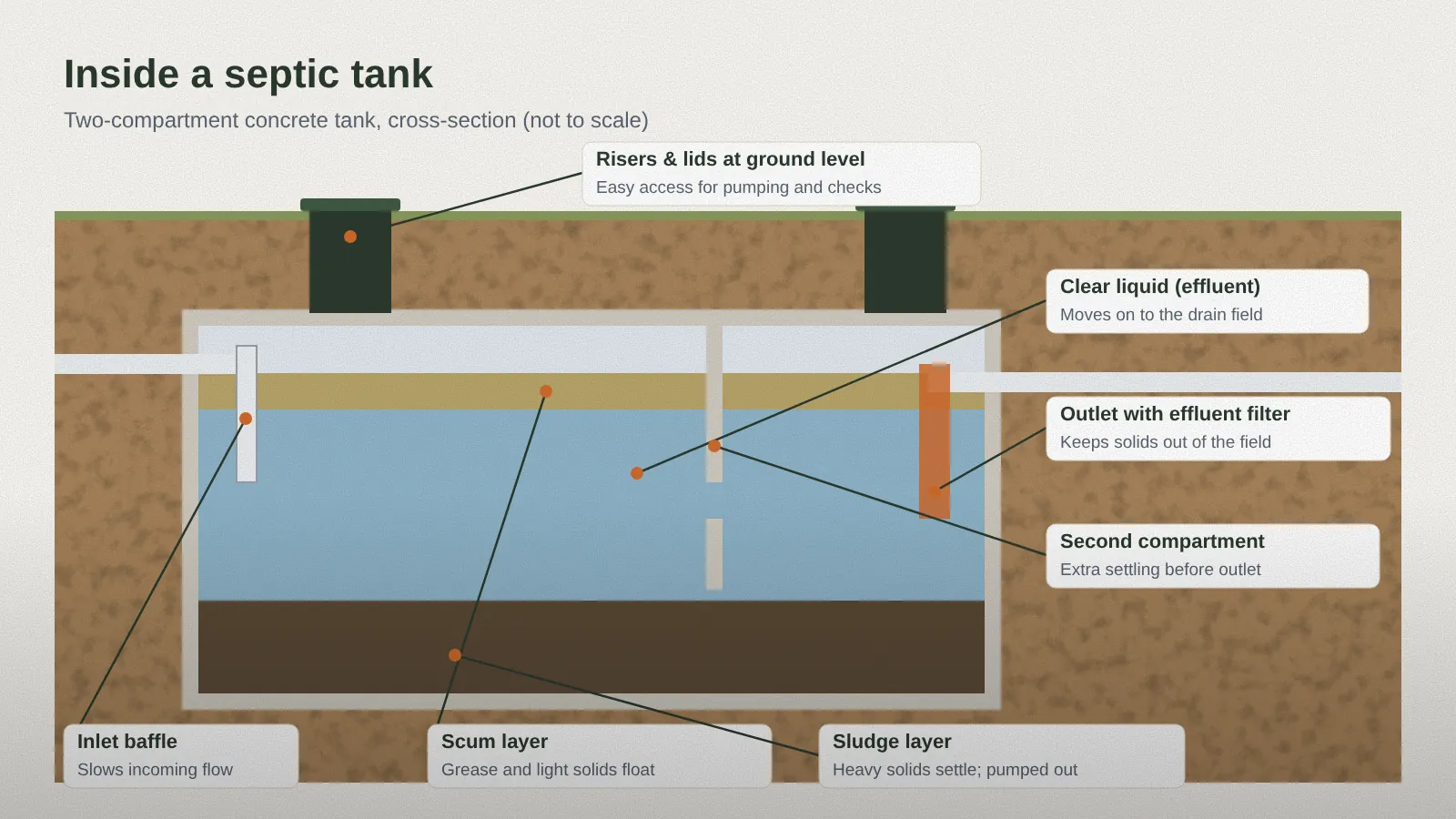
Wastewater from the house flows into the tank. Heavy solids sink to the bottom as sludge, grease and light material float to the top as scum, and the clearer liquid in the middle flows out to the drain field. Baffles and an effluent filter keep solids where they belong.
Tank types
Concrete
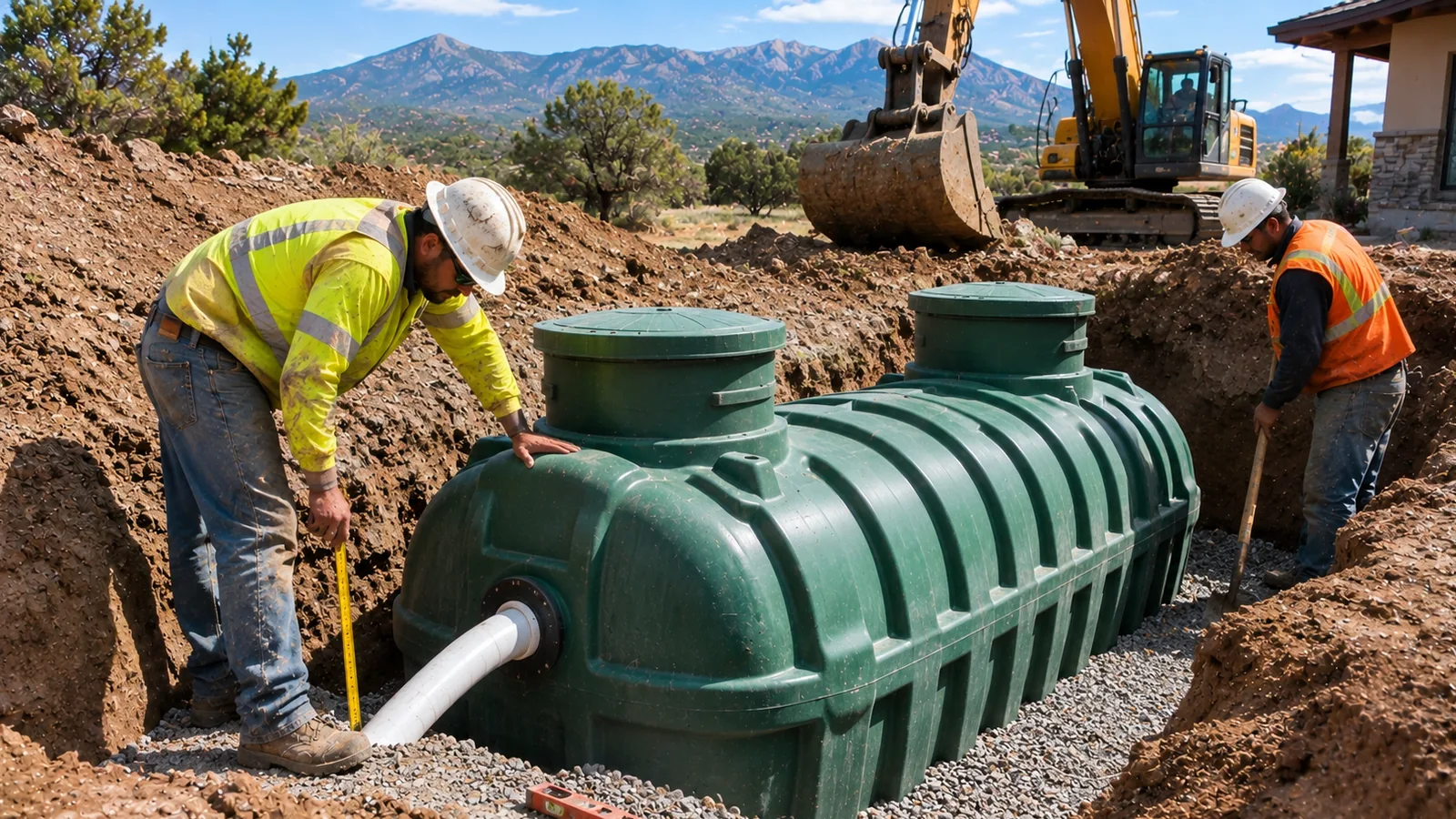
Heavy and durable. The most common choice; needs a boom truck or excavator to set.
Polyethylene / plastic
Lighter and easier to get onto tight or remote lots. Must be installed carefully to prevent shifting.
Installed right
- Sized for the home under state rules
- Set on a firm, level base
- Inlet and outlet at the right elevations
- Watertight connections and seams
- Risers and lids to ground level for easy access
- Effluent filter at the outlet
Replacing an old tank
Old steel tanks rust out, and some older concrete tanks crack or lose their baffles. Replacing the tank may require a permit and should be done with the drain field checked at the same time.
Septic questions
Concrete or plastic?
Both work. Concrete is heavy and durable; plastic is easier to deliver to hard-to-reach sites.
Can you replace just the tank?
Often, if the drain field is still working. We'll check it.
Do I need risers?
They make pumping and inspections much easier and are worth adding.